Leave your narrative.
In your voice. On your terms.
Creomind builds a private archive of what you actually said, and a Cognitive Model your family can talk with, in your voice, about the questions you were never asked.
Hear what they said. Talk with what they left behind.
You: “What did you think when you first met Dad?”
“Well, actually, I didn't like him very much at first. He talked too quickly and he was far too sure of himself. It took me a whole summer to notice he was kind.”
- Conversation 012Love and relationshipsRecorded 14 March 2026
- Voice · 02:41Original recordingSource available
You may have twenty thousand photographs of someone you love. Almost none of them explain how they thought.
We keep faces, moments and messages. What tends to disappear is everything underneath them.
- why they made the decisions they made
- what they believed, and what they quietly doubted
- what changed their mind
- how they reacted to uncertainty
Creomind preserves the perspective behind a life.
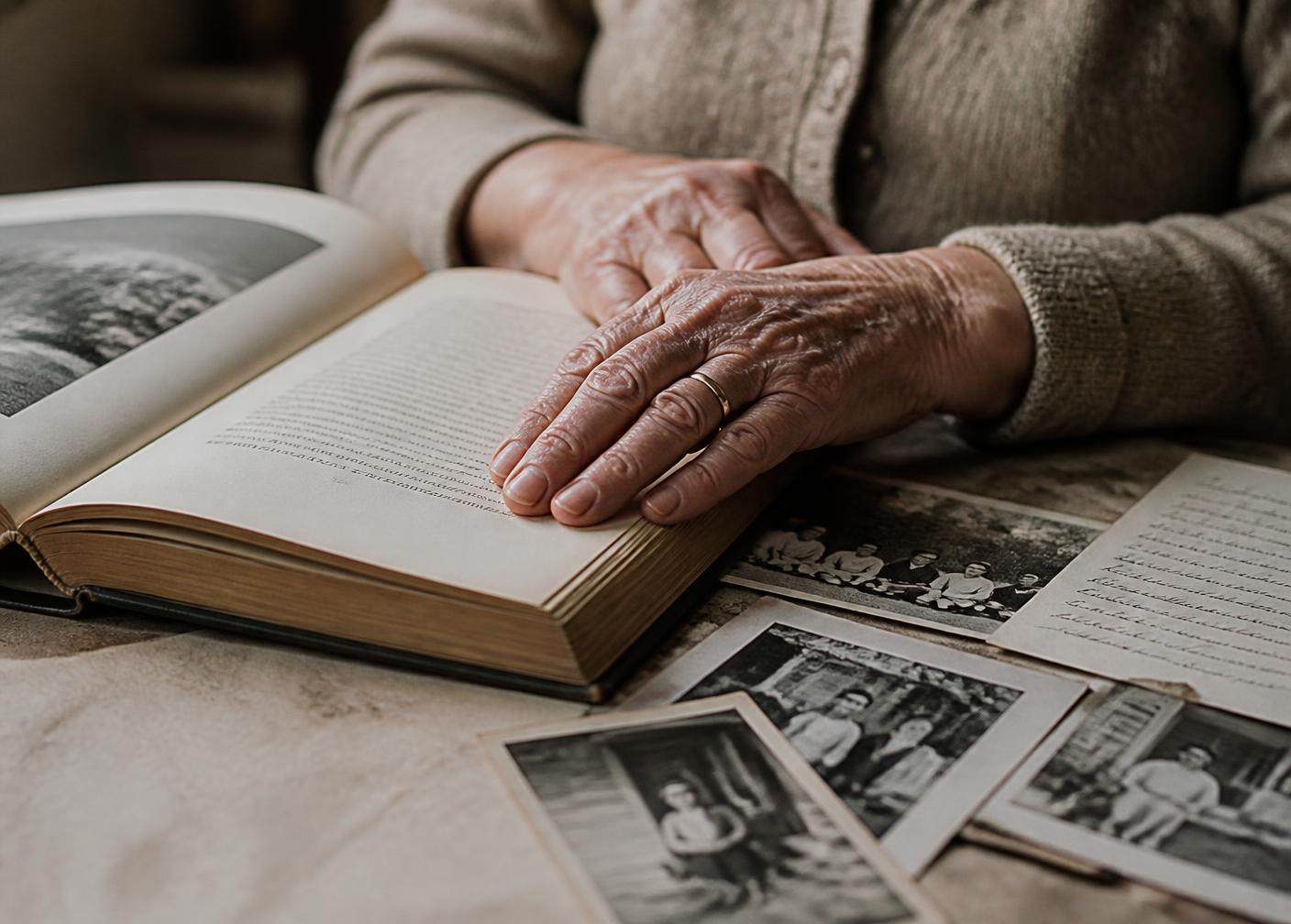
Hear what they said. Talk with what they left behind.
Archive plays the person as they documented themselves, with date and source attached. Generative is a conversation with their Cognitive Model, answering in the first person and in their modeled voice where consent allows, always marked as generated.
You: “What did Mum say about marriage?”
“I never thought a good marriage meant agreeing on everything. It meant staying curious about someone long after they stopped surprising you.”
You: “Mum, what would you make of my marriage now?”
“I'd want to know whether you two still ask each other questions. That's the thing I watched for. Not the arguing. The curiosity.”
Underneath the archive sits a structured representation of one perspective.
We call it the Creomind Cognitive Model: a computational representation of patterns in one person's memories, values, relationships, decisions and reasoning, built only from material they chose to leave. It grows with every conversation, and it is allowed to hold contradictions rather than average them away.
What happened, in the words of the person it happened to.
What consistently mattered, across decades and across decisions.
How they understood specific people, not people in general.
How they weighed risk, loyalty, money, ambition and time.
How they got to a point, and where their thinking disagreed with itself.
- Memory coverage8 of 10
- Values9 of 10
- Decision patterns7 of 10
- Relationships8 of 10
- Belief evolution6 of 10
- Language profile9 of 10
Confidence is never one number. A model can know someone well on family and barely at all on subjects they never discussed.
- Family adviceStrong support
- Career decisionsStrong support
- RelationshipsModerate support
- PoliticsLimited support
- TechnologyVery limited support
Teach your Creomind who you are.
Each session explores a different part of how you think, and each one makes the model more specific to you.
- What belief have you changed your mind about most dramatically?
- What makes someone trustworthy?
- What mistake taught you the most?
- Which decision most changed the direction of your life?
Guided sessions that explore memory, values, decisions and relationships. At your pace, alone or with someone close to you.
Recordings, transcripts, photographs, letters and documents, structured and kept with their original date, source and context.
From authorised archive material, Creomind builds a structured representation of one specific perspective.
The archive keeps growing while you are here, and stays readable, exportable and open long after.
“What made you choose Dad?”
“He was not the most charming man in the room. He was the one who listened to the end of my sentences. I was twenty-three and I did not know yet how rare that was.”
Every archive answer shows its sources. A memory can be traced back to the recording, letter or document it came from.
Presence on the surface. Provenance underneath.
A generated answer should feel like a conversation and never leave you unsure what you are talking to. Where the archive is thin, the interface says so first, and a speculative answer is named as speculative.
You: “Mum, what do you think about colonising Mars?”
Margaret's Cognitive Model has limited evidence for this topic. She rarely spoke about it. You can ask anyway, and the answer will be inference rather than memory.
- Curiosity about explorationModerate evidence
- Scepticism toward unnecessary riskStrong evidence
- Interest in technologyVery limited evidence
- Provenance. Every source keeps who, what, when, format and original context.
- Labelling. Generated answers are marked as generated, in the interface and in the export.
- Separation. Generative mode can be limited, and private archives are not used to train external models.
Photography preserved appearance. Video preserved moments. Creomind preserves perspective.
- Why did you forgive him?
- What did becoming a mother teach you?
- Which decision changed your life?
- Who were you before you became my mother?
There are questions you have not thought to ask yet. The archive should still be able to meet them.
How closely can a Cognitive Model reproduce the recurring patterns of the person it represents?
This is the research question behind Creomind, and it is open. We are developing a rigorous methodology for Cognitive Model Fidelity, and we do not publish accuracy figures we cannot defend.
“Your daughter wants to leave university to start a company. What do you tell her?”
“I would tell her to go, and to keep the door to the degree open for two years. I would not tell her it is safe. I would tell her that I did the same thing at thirty-nine and never regretted the leaving, only the way I announced it.”
“Go, but keep a way back for a couple of years. I left a secure job myself, and the leaving was never the part I regretted. Tell the people who love you before you tell anyone else.”
Some memories deserve more than a cloud folder.
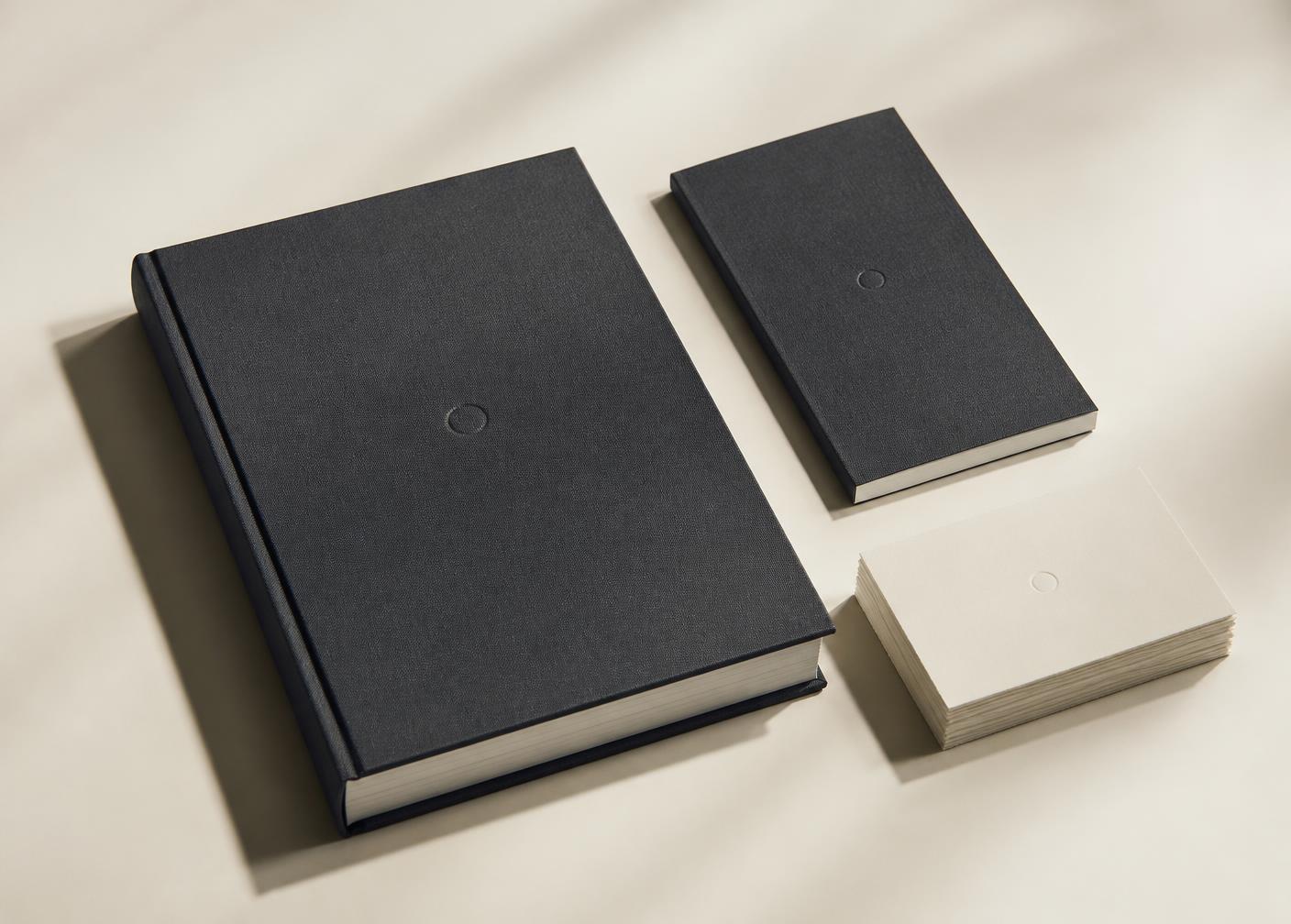
An archive can be explored on a screen, listened to in the original voice, and printed as a bound volume set from the person's own words. Access is decided by the person the archive belongs to.
If AI can model language in general, how much of one specific person can it model responsibly?
Creomind was founded by Lena Kolodziejak, whose background sits between cognitive neuroscience and data science, with years spent building Data & AI systems at Microsoft and teaching at university level.
“Technology had become extraordinarily good at generating new information, while we were still remarkably bad at preserving the people who created meaning in our lives.”
Portraits, letters, photographs, film and audio each added a dimension, and each stopped short of the patterns behind how a person interpreted the world. Creomind is a long attempt at that last part, built downstream of the evidence at every step.
A record of who you were. A model of how you think.
You cannot predict every question the future will ask. You can leave enough of yourself to help answer them.
Start with one conversation. Build your own, or build one with someone you love. We work with a small number of people at a time, and we discuss cost plainly before anything is decided.
Research
Individual cognitive modeling, memory provenance, uncertainty and the ethics of modelling a person.
Digital Immortality vs. Human Preservation
Why a computational model of a person should never be confused with the person themselves.
Read the article- 2024.02Generative Ghosts: Anticipating Benefits and Risks of AI AfterlivesCHI 2025
- 2024.05Griefbots, Deadbots, Postmortem Avatars: on Responsible Applications of Generative AI in the Digital Afterlife IndustryPhilosophy & Technology
- 2024.10Neuron-based Personality Trait Induction in Large Language ModelsICLR 2025
Frequently asked.
Archive mode plays what the person actually said, recorded or wrote, with a date and a source. Generative mode is a direct conversation with their Creomind Cognitive Model: it answers new questions in the first person, in their modeled voice where consent allows, and the interface marks the response as generated rather than recorded.
A computational representation of patterns in one person's memories, values, beliefs, decisions, relationships, language and perspective, built only from material they chose to leave. It is not a mind, not a digital brain and not a replacement for the person.
It is an inference, not a memory. We describe support in plain language, from strong to speculative, based on how much relevant archive evidence exists. We do not display invented probability scores, and evaluation methodology is still in development.
Archive mode says that no direct answer has been recorded and offers related memories. Generative mode makes the limitation visible first. If you choose to continue, the response is clearly identified as speculative.
Yes. The archive is built with the person, in their own voice, with their informed consent at every stage. We do not build archives from third-party material about someone who cannot agree to it.
Private archive material is used within that person's Creomind to organise and retrieve source material and, where Generative mode is enabled, to produce clearly labelled modeled responses from their Cognitive Model. Private archives are not used to train external or general purpose models.
Source material and the archive belong to the person who made them, and pass to the family they choose. Recordings, transcripts and metadata export in open formats, and consent is revocable. Creomind retains its own software and methodology.
Typically between 3 and 6 months, depending on how many sessions are recorded and how much existing material a family brings. Pricing is discussed plainly in the first conversation, before anything is decided.